
The Goal Has Always Been the Bedside
Foundation for Addie’s Research was created to help find more options for children with high-risk, metastatic and relapsed Hepatoblastoma. In 2024, two different research stories reflected that mission: a new investment in CAR T-cell immunotherapy at Children’s Hospital Colorado and continued progress around volasertib, a drug FAR had helped investigate for Hepatoblastoma through earlier preclinical research.
Neither path offered a guarantee. That is not how research works. But both represented the kind of opportunity FAR looks for; credible science with a potential route from laboratory work toward clinical testing.
A New Direction: CAR T-Cell Therapy
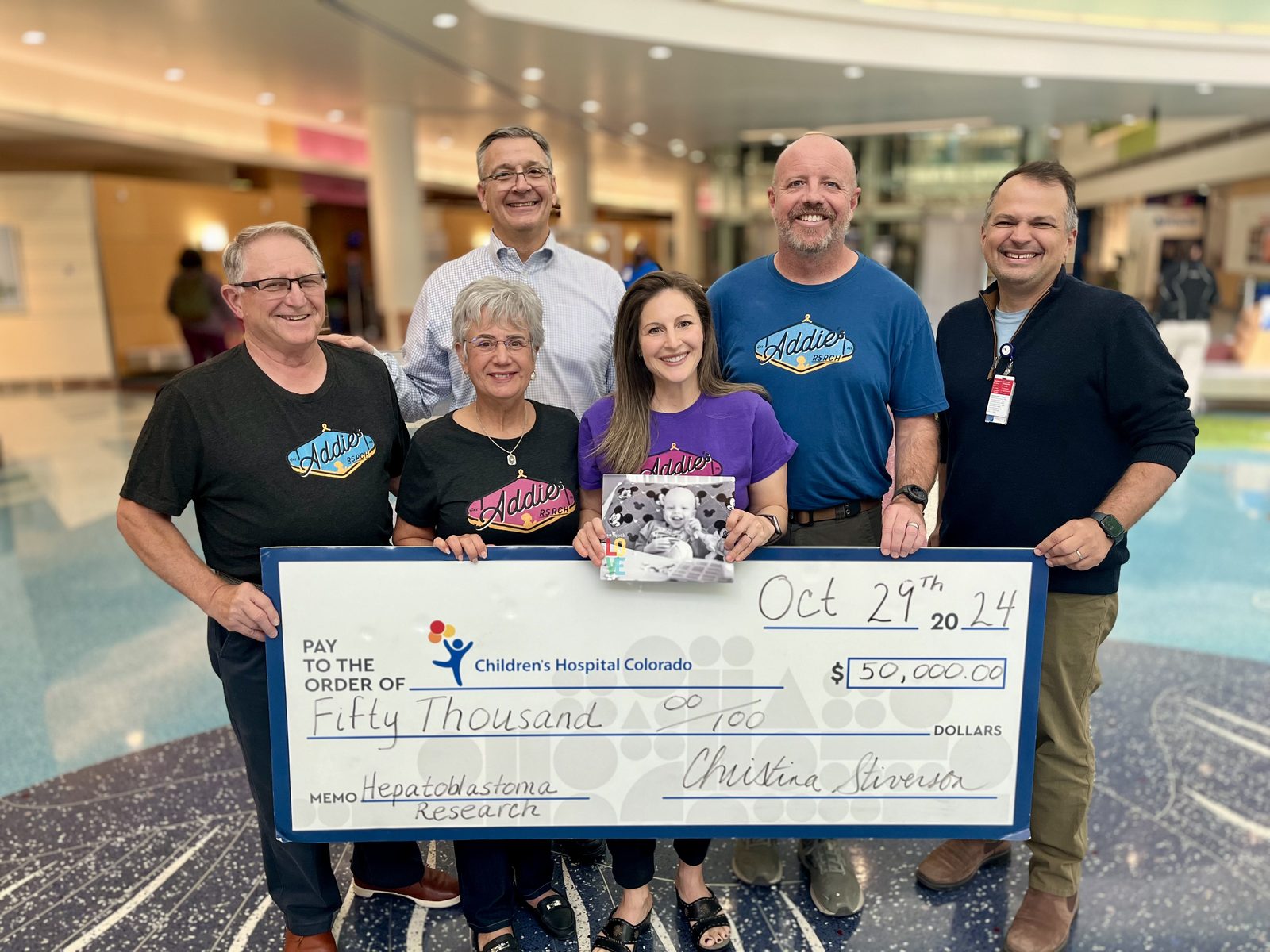
In 2024, FAR partnered with researchers at Children’s Hospital Colorado to fund preclinical work investigating whether Hepatoblastoma could be included in a developing CAR T-cell immunotherapy trial.
CAR T-cell therapy modifies a patient’s own immune cells so they can recognize and attack a specific target on cancer cells. The approach has transformed treatment for some blood cancers, but solid tumors have been much harder to treat successfully. For Hepatoblastoma, that challenge makes careful preclinical work essential.
FAR’s decision to support the project was driven by preliminary scientific evidence and the possibility of moving a new treatment strategy toward children who may have few remaining options. The foundation is grateful to its research partners, including Dr. Navin Pinto and Dr. Michael Verneris, for their commitment to advancing therapies for pediatric solid tumors.
Volasertib: Staying With a Promising Idea
At the same time, FAR continued following the progress of volasertib. The foundation had supported preclinical Hepatoblastoma research on the drug through cc-TDI beginning years earlier. That work contributed to a 2019 peer-reviewed publication showing preclinical activity of volasertib in high-risk Hepatoblastoma models.
Oncoheroes Biosciences later took on development of volasertib for pediatric cancers. In 2023, the U.S. Food and Drug Administration allowed an Investigational New Drug application for volasertib to proceed, opening the door to clinical investigation in pediatric oncology. FAR supported Oncoheroes as part of its effort to help promising childhood cancer drugs advance beyond the laboratory.
The current Oncoheroes pipeline continues to describe volasertib as a clinic-ready pediatric oncology compound. Its listed clinical indications have evolved as development plans have progressed, which is an important reminder that drug development is rarely linear. FAR’s interest remains the same: support credible efforts that can expand the number of treatments being seriously investigated for children.
What Strategic Funding Looks Like
FAR is a lean foundation by design. That makes selectivity essential. The foundation cannot fund every interesting project, so it looks for strong investigators, a clear scientific rationale, collaboration, and a realistic next step.
Sometimes that next step is generating the preclinical evidence needed to justify a trial. Sometimes it is helping a promising compound survive the difficult transition from academic research to clinical development. And sometimes it is knowing when the evidence has changed and resources should move elsewhere.
That discipline is what FAR means by intentional funding. The goal is not to collect projects. The goal is progress.
FAR does not measure success by how many, or how large of, grants they make. They measure it by whether the work is answering important questions and getting closer to children. When there is a credible opportunity to move something toward the bedside, that is what I feel passionate about supporting.
Robert Stack, Donor, Foundation for Addie’s Research
Keep the Work Moving
Support FAR’s mission to advance carefully selected Hepatoblastoma research and subscribe for updates as the CAR T-cell work and other research partnerships progress. For broader treatment, research and family resources, visit the Hepatoblastoma Resource Network.
