
A Different Kind of Beginning
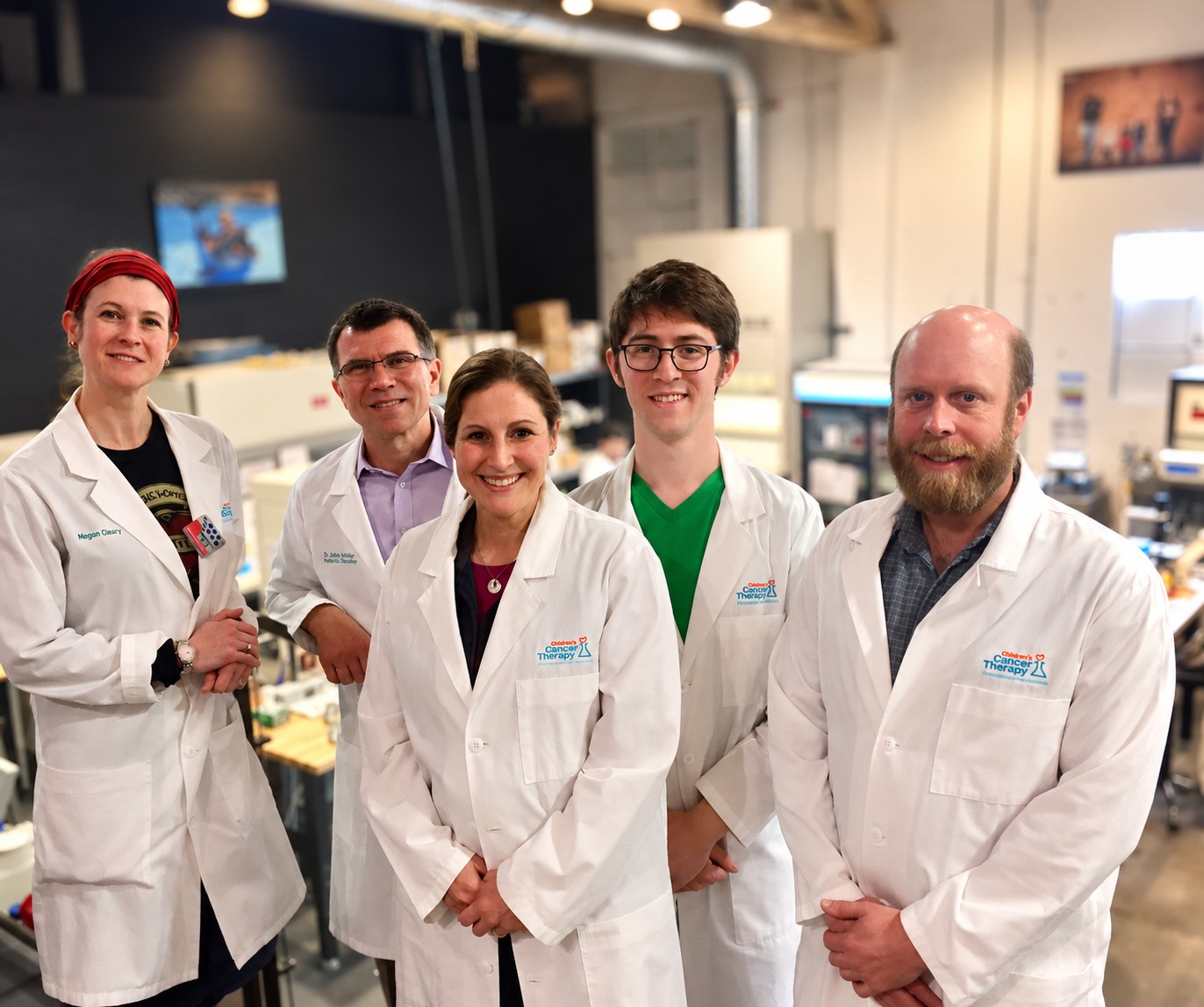
In March 2017, only months after Addie died from Hepatoblastoma, Christina and Cody Stiverson walked into the Children’s Cancer Therapy Development Institute (cc-TDI) in Oregon carrying the questions that had followed their family through treatment: Why did this cancer resist chemotherapy? Why did it spread? And what would it take to give another child more options?
The visit became the beginning of Foundation for Addie’s Research (FAR) and a research strategy that still guides the foundation today: find credible scientists willing to take on the hardest problems in rare pediatric cancer, understand exactly what the research is trying to solve, and put resources where they can help move promising ideas toward children.
Seeing Addie’s Tissue in the Lab
During that first visit, the Stiversons saw the nitrogen tank where Addie’s donated tumor tissue was being carefully preserved for research. It was a deeply personal moment, but it also made the purpose of tissue donation tangible. Addie’s tumor could become part of the scientific work needed to understand Hepatoblastoma and test new approaches.
At the time, Christina wrote that “Addie’s spirit is alive and doing quite well in the lab.” That sentence captured something the family was only beginning to understand: Addie’s life would remain at the center of their motivation, but the work ahead would be about every child who might someday face the same diagnosis.
Why cc-TDI Mattered
cc-TDI, founded by pediatric cancer researcher Dr. Charles Keller, was built to tackle rare childhood cancers that often receive too little commercial attention. The lab’s model also welcomed families into the research conversation. Researchers asked the Stiversons which problems felt most urgent from a parent’s perspective, including metastasis, chemotherapy resistance and the unusual biology of aggressive Hepatoblastoma.
For FAR, that relationship established an important standard. The foundation would not fund projects simply because they sounded promising. It would seek partners with scientific credibility, urgency, transparency and a realistic path for turning laboratory findings into better treatment options.
From Questions to a Research Mission
Throughout 2017, the partnership deepened. FAR supported work designed to expand Hepatoblastoma models, genomic understanding and drug testing so researchers could investigate treatments specifically against Hepatoblastoma rather than relying only on drugs developed for other cancers.
That distinction became central to the foundation’s mission. Children with high-risk, metastatic or relapsed Hepatoblastoma can run out of established treatment options quickly. FAR was created to help close that gap, not by promising a cure, but by helping rigorous science move faster.
Nearly a decade later, the research network surrounding Hepatoblastoma has grown dramatically. FAR’s partnerships now extend across institutions, researchers and organizations in the United States and internationally. But the principle established in that Oregon lab has not changed: every research investment should answer a meaningful question and move the field closer to more options for children.
We could not change what happened to Addie. But we could decide what we did with everything she taught us. Seeing her tissue in that lab made the work real. It gave us somewhere to put our questions, our energy and our hope, and it gave us a responsibility to keep pushing for the children who would come after her.
Christina Stiverson, Founder, Foundation for Addie’s Research
Keep the Work Moving
FAR continues to support carefully selected Hepatoblastoma research with the goal of creating more effective, less toxic treatment options. Support the mission, read Addie’s story, join the research update newsletter, and explore family and research resources through the Hepatoblastoma Resource Network.
